The choice between a full truckload and a partial load is usually reduced to a question of volume: a lot of cargo, or a little? In reality it touches the delivery date, the fragility of the goods, access at the consignee and the customs process at once.
We would rather begin somewhere else: with the two models themselves, and the point at which one quietly overtakes the other.
Two models, two logics
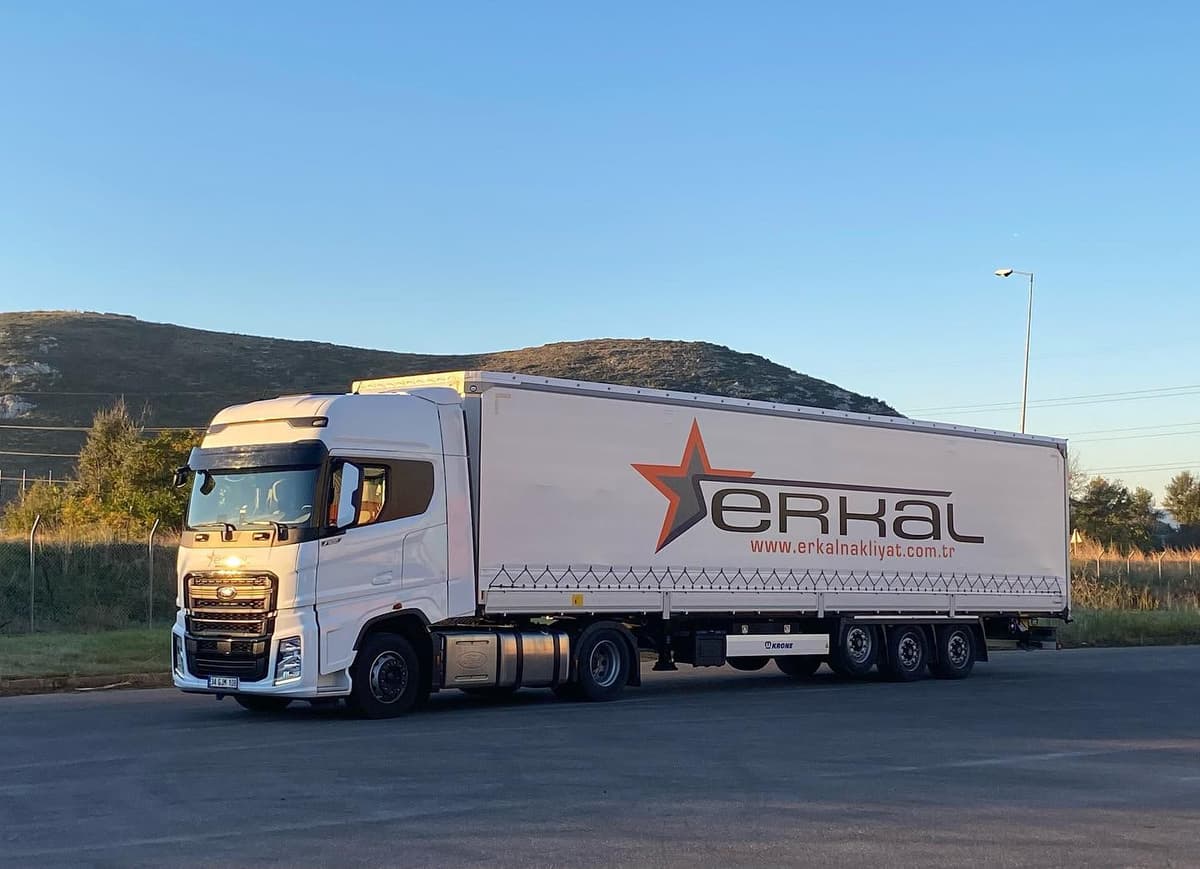
Under full truckload (FTL) the whole capacity is reserved for one customer. The goods are collected, carried without transhipment, and delivered. The vehicle moves for nothing else.
Under partial or less-than-truckload (LTL), several consignments on the same lane share capacity. They are grouped at a consolidation warehouse, carried on one vehicle, separated on arrival. You pay for the space you occupy.
Where does the threshold sit?
A standard curtainside semi-trailer offers roughly 13.6 loading metres and 33 EUR pallets. Under Council Directive 96/53/EC the maximum authorised weight of an articulated vehicle with five or six axles is 40 tonnes, rising to 44 tonnes in combined transport carrying a 40-foot container.
As a rough threshold:
- Below six to eight pallets, stackable, partial is almost always cheaper.
- Above fifteen pallets, or beyond seven to eight loading metres, a dedicated vehicle starts to win on cost and delivery discipline together.
- In between, the decision follows the delivery expectation rather than the dimensions.
Treat those as a starting point, not a rule. Density, packaging and route all enter the calculation.
Four questions that are not about size
How firm is the delivery date? A partial consignment waits at the consolidation warehouse for the other loads. A dedicated vehicle leaves when your goods are ready.
Will the goods survive transhipment? In a partial flow the consignment is handled at least twice. For fragile, unpalletised or sensitive cargo that risk has to be managed.
How accessible is the delivery address? A dealership entrance in a town centre may not accept a 16.50 m combination. A rigid truck, or a partial delivery, is then the better answer.
Who holds the customs paperwork? On shared capacity, one incomplete document set can hold the whole vehicle. On a dedicated truck that exposure is limited to your own consignment.
Comparison
| Full truckload (FTL) | Partial (LTL) | |
|---|---|---|
| Capacity | Reserved entirely for you | Shared |
| Transhipment | None, or minimal | At the consolidation warehouse |
| Cost basis | Fixed vehicle rate | The space you occupy |
| Departure | When your goods are ready | When consolidation completes |
| Suits | Bulky, sensitive, deadline-critical | Low volume, regular, stackable |
Sometimes it is neither
Cargo needing a cold chain, exceeding the legal envelope, or filling a vehicle on its own is served by neither standard model. Those need a plan of their own — refrigerated full truckload transport, say, or heavy transport.
Once we have heard what the cargo is, we sometimes say partial is the better fit, and sometimes exactly the opposite. Our aim is not to sell a model but to fit one to the cargo.
Where the dimensions are known, we can talk through the difference between full truckload transport and partial and groupage transport using your own consignment. Pallet count, weight and date are enough to start on the quote form.